A luxury carpet is more than a decorative surface. It brings warmth, texture, craftsmanship, and character into a space. Yet the beauty of a finished rug often hides the detailed work behind it. Two of the most recognised techniques are hand-knotting and hand-tufting. Both can produce impressive bespoke carpets, but they differ in construction, production time, durability, appearance, and cost.
Understanding hand knotted vs hand tufted carpets helps clients and designers choose the right option for each interior. At Kayra Bespoke Carpet, every project begins with the design vision, practical needs, and atmosphere of the space. The manufacturing technique is then selected to support that vision.
What Is a Hand-Knotted Carpet?
Hand-knotting is one of the oldest and most respected carpet-making traditions. Skilled artisans create the rug by tying individual knots of yarn around the warp threads of a loom. Each knot is placed by hand, row after row, before the surface is cut and finished.
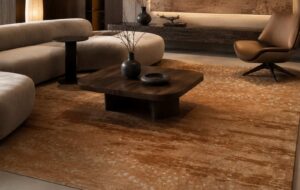
Because every knot is individually formed, the method requires patience and exceptional skill. A detailed rug may contain hundreds of knots per square inch, and a large custom piece can take several months to complete. The result is a carpet with structure, precision, and longevity.
The pattern is usually visible on both sides because the design is built directly into the foundation rather than attached to a backing. Small variations may appear, but these are part of the character of handmade work and give each carpet its own identity.
Why Choose Hand-Knotting?
The greatest advantage of a hand-knotted rug is durability. When made with quality fibres and properly maintained, it can last for decades and may even become an heirloom. Its dense construction suits living rooms, private residences, reception areas, and spaces where long-term value matters.
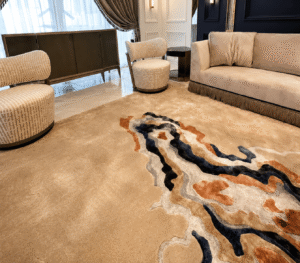
This technique also supports intricate patterns, subtle colour transitions, and fine detailing. Wool, silk, bamboo silk, or blended yarns can create depth and a luxurious feel. For clients seeking artistic quality and a strong sense of heritage, hand-knotting is an exceptional choice.
What Is a Hand-Tufted Carpet?
A hand-tufted carpet is produced using a handheld tufting tool. The artisan pushes yarn through a stretched fabric canvas, following a full-size design marked on the surface. Once the pile is complete, adhesive secures the yarn, and a secondary backing adds stability. The carpet is then sheared, carved, washed, and finished.
Although hand-tufting is faster than hand-knotting, it still relies on skilled workmanship. It should not be confused with fully machine-made production. The maker guides the tool manually, controls the colours, shapes the pile, and finishes details by hand.
Hand-tufted carpets are popular for customised interiors because the process offers flexibility in size, shape, colour, texture, and pile height. It allows creative designs to be produced faster while maintaining a premium appearance.
Why Choose Hand-Tufting?
Hand-tufting is ideal when a project needs a luxury custom carpet with a more accessible budget or faster delivery schedule. It works well for hotels, boutiques, offices, bedrooms, lounges, and large decorative areas.
The technique can create bold graphics, curved forms, organic shapes, logos, and sculpted effects. Different pile heights add dimension, while carving defines lines and separates design elements. This makes hand-tufting one of the most versatile bespoke manufacturing methods for contemporary interiors.
Hand Knotted vs Hand Tufted: The Main Differences
When comparing hand knotted vs hand tufted carpets, construction is the key distinction. A hand-knotted carpet is built knot by knot directly onto the foundation. A hand-tufted carpet uses yarn inserted through a canvas and secured with adhesive and backing.
Production time also differs. Hand-knotting is a slow, detailed process, while hand-tufting can be completed more quickly. This influences cost. Hand-knotted carpets usually require a higher investment because of the labour and time involved. Hand-tufted carpets offer cost flexibility without sacrificing customisation or visual impact.
Lifespan is another consideration. Hand-knotted rugs generally offer superior longevity. Hand-tufted rugs can also perform beautifully for many years, but their lifespan depends on the materials, backing, adhesive quality, location, and level of use.
Visually, both techniques can feel luxurious. Hand-knotted rugs often have a refined, organic character and exceptional detail. Hand-tufted rugs can deliver strong colour, sculptural texture, clean shapes, and dramatic patterns.
Read more: Modern Geometric Luxury Carpets and Rugs
Choosing the Right Technique
The best method depends on the purpose of the carpet. For an heirloom-quality piece or an interior where craftsmanship and longevity are the highest priorities, hand-knotting is preferred.
For projects requiring generous dimensions, dimensional texture, a distinctive custom design, or greater control over budget and schedule, hand-tufting may be the better solution. Traffic level, furniture placement, cleaning needs, pile preference, and fibre choice should also guide the decision.
At Kayra Bespoke Carpet, we approach bespoke manufacturing methods as part of the design process rather than as a simple production choice. Material, technique, colour, scale, and texture must work together to create a carpet that feels naturally connected to its setting.
Craftsmanship Made Personal
Whether hand-knotted or hand-tufted, a bespoke carpet should express the identity of the space. Both methods offer genuine craftsmanship, but each brings a different balance of artistry, performance, timing, and investment.
By understanding the differences between hand knotted vs hand tufted carpets, clients can make a confident decision. Kayra Bespoke Carpet transforms creative concepts into carefully crafted surfaces, combining specialist knowledge with a personal approach. The result is not simply a rug, but a made-to-measure element that completes the interior.