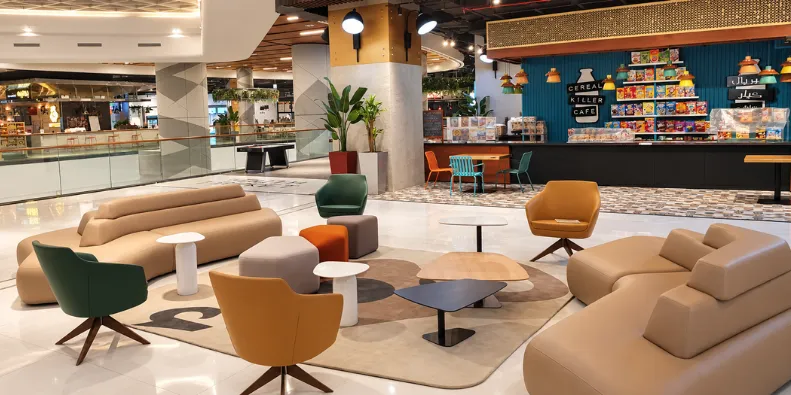
In interior design, even a few centimetres can influence how a space looks and feels. From furniture placement and walking areas to symmetry and visual balance, every measurement plays an important role in creating a well-proportioned interior. While flooring, lighting, and architectural details are usually planned with precision, rugs are often considered at a later stage. Incorporating scale-preserved room rugs and exact-dimension custom carpets early in the design process helps maintain the intended proportions, enhance furniture arrangements, and create a harmonious
However, a rug can make a significant contribution to the overall perception of an entire space.
For interior designers that design luxury residences, hospitality interior design, and planned commercial spaces, the dimensions of a rug are far more than just covering a floor. They are concerned with the relationship between furniture, architecture and open space.
This is where the scale saved room rugs come in extremely useful.
Bespoke rugs can be created to fit the dimensions of a room, whereas a standard size rug will need the designer to tweak the rug size to fit the room. Each element, be it size or location, may be seen as a part of the larger interior design.
This creates a rug that feels more like a part of the space than just a piece in it.
Why Scale Matters in Interior Design
If you have a gorgeous rug, but the dimensions are incorrect, it can actually backfire.
Envision a large living room with some sofas, a few chairs, and a central table for holding a coffee pot. Seating arrangement can look disjointed if the rug is too small. When it’s too big, there may be some loss of visual open space in the room.
In either case, it may not be what the designer intended.
The relationship between the various elements in the room is determined by the use of proportion. It helps decide the placement of furniture in a space and the eye flow from one feature to another.
The use of the correct size rug can create a distinct seating space, enhance the architectural elements and can tie a room’s furnishings together.
For all designers that use accurate floor plans and deep interior drawings, it is critical that these relationships are preserved.
With the use of scale preserved room rugs, designers are able to consider rugs in the same way that they would consider joinery, furniture layouts and other architectural finishes.
Begin with the Actual Room Dimensions
Accurate rug planning starts with accurate measurements.
While architectural drawings are an important foundation, there may be a few variations to the actual dimensions of a room.
The amount of floor area can be affected by wall finishes, joinery, skirting details, column sizes and positioning of furniture.
Designers need to compare the rug dimensions with the actual site before committing to a bespoke rug.
It is especially relevant in projects with irregular rooms, curved walls or even in the most modified furniture placement.
For instance, if the sofa is moved around in a furniture plan, or its size needs to be upgraded, then a rug that fits the original plan can no longer be used effectively.
Using exactly sized custom carpets allows designers more control over the desired dimension, with the final dimension being checked and industry standards taken into consideration.
The purpose is not merely to get a predetermined length and width. It is important to comprehend the significance of those proportions to the overall composition.
Creating Balance Between Furniture and Flooring
Furniture placement is one of the most crucial things to take into account when determining rug size.
The seating arrangement is often determined by the rugs in the living room.
All legs of all furniture may be on top of the rug or the front legs of larger furniture may be in front of the edges of the rug.
Both methods may be effective if planned for.
In the dining rooms, the function of the relation between the rug and the furniture is more functional. A dining rug ought to have room for the dining chairs to maneuver without attaching to the outside edges of the rug often.
Another approach is required for bedrooms. The rug can be used to cover the sides and foot of a bed, providing a more inviting and harmonious look around the bed furniture.
For now, however, there is no one-size-fits-all size of all projects.
The layout of the furniture for a luxury apartment, private villa and hotel suite can appear similar but the proportions require attention to detail.
With a custo-designed rug, the designer can chose these proportions for his/her design goals, as opposed to the dimensions of the rugs that are available for purchase.
Preserving the Original Design During Resizing
One of the less obvious challenges in custom rug production is maintaining the scale of the artwork itself.
A rug design may look beautiful at one size but become visually unbalanced when stretched to fit another.
Circles can turn into ovals, flowing lines may appear distorted, and geometric elements can lose their intended relationships.
Borders can also become disproportionately wide or narrow if the artwork is resized without careful consideration.
For this reason, preserving scale involves more than adjusting the outer dimensions.
The internal design must also be reviewed.
When creating scale preserved room rugs, designers and manufacturers should consider whether the artwork needs proportional scaling, selective extension, or a carefully adapted composition.
For example, extending a large abstract rug may require continuing its design rather than stretching every element.
Similarly, a rug with a decorative border may need the border width to remain consistent while the central field is adjusted.
These decisions help maintain the character of the original artwork while accommodating the room’s dimensions.
Custom Shapes for Architectural Accuracy
All rooms do not have the typical rectangular shape.
Walls, partitions, furniture and open spaces are today often curved, angled, non-symmetrical, or with odd geometries.
For kitchens, bedrooms, and bathrooms, you might find that a square or rectangular rug will not fit in the interior of a room.
A more considered alternative is using custom shapes.
The size of a round sofa can be complemented with a curved rug. An irregular design can react to a seating arrangement that has a particular angle. A well-designed runner may support the axis of a long hallway.
The important consideration is how the rug relates to its surroundings.
Unusual means unusual and a custom shape is not supposed to be used just because it is unusual. It should prevent the structure and enhance the design symmetry.
When needed, CAD drawings may be very helpful for communicating unusual shapes prior to manufacture, and for projects that demand a specific dimension, custom carpets can be designed using full-size templates, or drawings with detailed dimensions.
It enables designers to observe how the ideas for the rug will fit into the selected floor space.
Material, Pile Height, and Edge Finishing
Rug dimensions are crucial, but not all the key elements that impact the fit of a rug in a room.
You can choose a variety of these commodities that will influence how it looks when finished: the material, construction, pile height, and edge finishing.
A thick carpet might be heavier in visual weight than a thinner, low pile carpet.
High and low pile methods are used to add dimension to rugs without altering the overall size of the rug.
Hand tufting and hand knotting also provide various means of contrast in detail and surface.
There are no exclusive edges.
A refined and meticulous finish can facilitate the rug to blend seamlessly with contemporary environments and flooring materials, notably those of stone, wood, or premium materials.
It is important to be mindful of area clearances, transitions and circulation when choosing the final pile height.
For scale-preserved room rugs and exact-dimension custom carpets, finalising the materials, pile height, and edge finishing before production begins is essential, as making changes once manufacturing is underway can be challenging.
The Importance of Clear Technical Communication
Successful custom rug production depends on communication between the designer and manufacturer.
A beautiful concept image alone may not communicate every detail required for accurate execution.
Technical drawings should clearly identify the rug’s overall dimensions, shape, intended design orientation, and important reference points.
Where necessary, they should also specify border widths, artwork positioning, colour references, and pile-height variations.
For irregular shapes, clear measurements and reference geometry are especially important.
Designers should review the final shop drawings before production, ensuring that the dimensions and proportions reflect the approved layout.
Because handmade carpets involve textile materials and manual manufacturing processes, reasonable production tolerances should also be agreed upon in advance.
This coordinated approach reduces uncertainty and helps preserve the original design intention from drawing to finished rug.
Planning for the Final Installation
A rug’s relationship with the room should be checked one final time before installation.
Furniture positions, access routes, finished flooring levels, and site readiness can all influence the final placement.
For larger bespoke rugs, installation planning may also include access restrictions, transportation, and handling requirements.
The rug should be positioned according to the agreed layout, with particular attention to its alignment with surrounding architectural features.
In symmetrical rooms, even a slight shift can become noticeable.
In asymmetrical spaces, the correct position may depend on furniture rather than the room’s centreline.
These subtle details make a significant difference in achieving a polished and well-balanced interior. With scale-preserved room rugs and exact-dimension custom carpets, designers can maintain accurate proportions, enhance visual harmony, and create a seamless connection between furniture and architectural elements.
Bringing Design Precision to Life with KAYRA Bespoke
For interior designers, a rug should never feel like an afterthought.
It should complement the architecture, respect furniture proportions, and support the overall design vision.
We work with interior designers, architects, and design professionals to develop customised handmade carpets and rugs for luxury residential, hospitality, and commercial projects.
Our bespoke approach allows consideration of dimensions, shapes, artwork, colours, materials, textures, and pile heights according to project requirements.
From reviewing design intent and technical drawings to developing the final rug, the focus remains on creating a piece that feels purposeful within its environment.
Whether the project calls for an expansive living room rug, an irregularly shaped statement piece, or a carefully proportioned carpet for a sophisticated interior, custom manufacturing provides the flexibility to work beyond standard sizes.
Because in a beautifully designed space, the right proportions are not an accidental detail. They are part of the design itself.
Bring your interior design vision to life with KAYRA Bespoke. From precise dimensions and custom shapes to unique colours, materials, and textures, we create handmade rugs tailored to your space.
Planning your next interior project? Discuss your custom rug requirements with KAYRA Bespoke and let us help you create the perfect rug for your space.